MOVIES
Estonia, 2010, 68 min
Liivo Niglas
28.01.2012 13:15
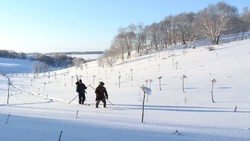 The action in the film revolves around an ancestrally used practice of hunting sable by net. Set in rural Kamchatka in the Russian Far East, where fewer than 20 speakers of Itelmen remain, the film goes beyond its original aim to recapture a language and a hunting practice that are remembered but no longer in use. Two hunters encounter the wild environs and villages of Kamchatka as a history laden homeland and memories, nostalgia, resignation and hope echo throughout the film.
Liivo Niglas, born in Estonia in 1970 is currently a lecture of ethnology at University of Tartu, Estonia. He also runs an independent production company, Mp Doc, for anthropological documentary films. He has made films in Siberia, Africa, Central Asia and North America. Some of his work are “The Brigade” (2000), “Yuri Vellas´s World” (2003), “Adventure High” (2004), “Making Rain” (2007).
Director and production: Liivo Niglas
Language of dialogues: Russian, Itelmen
Language of subtitles: English
Lauching of film and award (selection):
International Festival of Ethnological Film, Belgrade, Serbia, 2011. Grand Prix.
Sardinia International Ethnographic Film Festival, Nuoro, Italy, 2010
Festival of Visual Anthropology ASPEKTY, Torun, Poland, 2010
Parnu International Documentary and Anthropology Film Festival, Parnu, Estonia, 2011
The Netherlands, 2011, 29 min
Fedor Ikelaar
28.01.2012 16:15
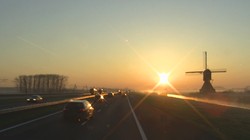 The road, to most of us simply a path leading to a destination, but to many truck drivers the road itself is their destination, their goal and their home. To them the road is a cold-hearted mistress that dominates their lives. In this documentary three of these truck drivers are followed on that road as they passionately explain what drew them to truck driving and what is so extraordinary about their jobs. They talk openly and reflectively about the thoughts, hopes, dreams and aspirations that keep them going and help them position this demanding job into their lives. Through both humour and sorrow surprising sides and depths of these seemingly tough men with their apparent uncomplicated lives are disclosed.
At the age of 27 Fedor abandoned a successful IT career to study anthropology at the VU University in Amsterdam. Anthropology became the ideal field to explore not only his interest in culture, development and conflict, but also to combine these with his passion for filmmaking. Though his own university has no visual ethnography in its program, he spent a lot of time exploring this field on his own or with some likeminded students. With these students he also started to make short ethnographic documentaries and a full length ethnographic production titled “The Challenge.” This experience led up to “What Keeps Them Going”, his first solo production. He recently graduated and has taken on a research position at the municipality of Amsterdam, he does not intend to abandon documentary filmmaking as he intends to do projects on the side to continue developing both his skills and style.
Director and production: Fedor Ikelaar
Language of dialogues: Dutch
Language of subtitles: English
Lauching of movie:
Athens Ethnographic Film Festival
Norway, 2007, 57 min
Rossella Ragazzi
28.01.2012 20:40
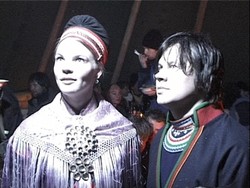 This film narrates the meeting with Sara Marielle Gaup and Lawra Somby, two young performers of joik (Sami chanting technique), born in the north and the south of Sápmi (the cultural nationhood of Sami people in North Norway, Sweden, Finland and Russia). They have come together through a creative musical project called “Adjágas” which in Sami means “the state between sleep and awakening”. In this peculiar state one can unveil reality and tune into the most profound and original joiks. Adjágas, in this way bring the musical-lyrical practice of joik toward the international musical scene by performing with musicians of different horizons, and adapting its performances to the context of reception. The protagonists express different ways of life and concerns, relating also to what it means to be young artists with an indigenous background, having to work a way into the musical industry. It is also a film about what in the waves of the past is worth struggling for understanding, and how joik brings together everyday life, politics and spirituality and becomes a language healing the pain from the colonial history of the past.
Rossella Ragazzi, born in Rome, Italy 1965. Filmmaker, ethnographer and associate professor in visual anthropology and museology at the University of Tromsø, Norway. Graduated from National Italian Film School in Rome, and University of Paris and got PhD in Visual Anthropology in Ireland. She co-founded with Britt Kramvig and Ingeborg Solvang film company Sonar Film in 2003.
Director: Rossella Raggazzi
Production: Sonar Film Tromso
Language of dialogues: English, Sami, Norwegian
Language of subtitles: English, Czech